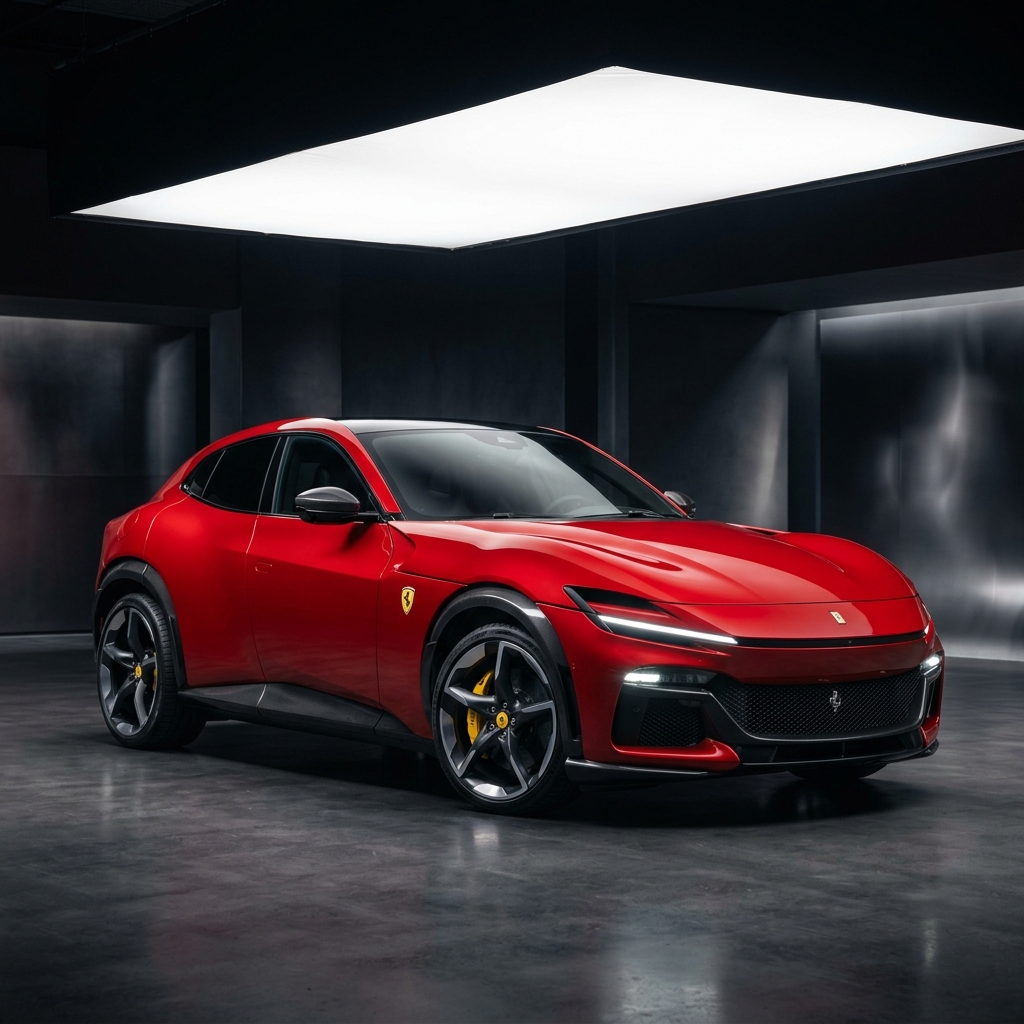
A Different Kind of Ferrari Data Point
The Ferrari Purosangue was never going to be a conventional product for a conventional buyer. At $398,000 MSRP with typical option loads pushing configurations past $450,000, it entered a market niche it effectively created: a naturally aspirated V12 four-door from a marque with no previous SUV history, sold to people who don't need an SUV but insist on owning one.
Now that the first examples have aged out of their no-sale periods and are appearing on the secondary market, we have real transaction data to analyze.
What Early Resale Figures Show
Pre-owned Purosangues with fewer than 5,000 miles are currently transacting between $430,000 and $520,000 — premiums of 8–30% over MSRP depending on specification, color, and how motivated the seller is. Full factory car configurations in rare colors (Blu Corsa, Verde Abetone, Rosso Mugello) are on the higher end. More common configurations in Grigio Titanio or Nero Daytona are closer to MSRP parity.
This is a notable difference from early Urus or Cayenne Turbo S resale dynamics, where premium depreciation was aggressive. The Purosangue is holding value in a way that high-allocation Ferrari models typically do: through managed scarcity and intense owner loyalty.
The Allocation Reality
Ferrari controls the Purosangue's market position the same way it manages every halo model: through dealer allocation gatekeeping. Buyers without established Ferrari relationships and documented purchase history of at least 2–3 previous Ferraris (including at least one special series or limited car) are effectively shut out of allocation at MSRP. This compresses supply at the base level and inflates secondary market premiums.
The practical consequence: the people flipping Purosangues at 20% premiums are typically established Ferrari clients who received allocation as a courtesy and immediately monetized it. The buyers paying those premiums are typically wealthy non-Ferrari buyers who lack the relationship history to get allocation but want the car now.
The Investment Angle — and Its Limits
Early data is encouraging for those who received allocation. But the Purosangue is not a conventional collector investment. It's a complex, expensive-to-maintain performance SUV with a 6.5L V12 that will require significant service costs over time. Long-term value is predicated on Ferrari maintaining production discipline (which they have explicitly committed to) and the four-door high-performance SUV segment not becoming commoditized by the time these cars are 10–15 years old.
The 10-year outlook depends heavily on whether Ferrari produces a successor or allows this to be a one-generation experiment. If the Purosangue becomes the first of a recurring nameplate, values will follow the standard Ferrari depreciation curve after the initial premium evaporates. If Ferrari discontinues it — as they've done with previous surprise segments — the first-generation scarcity premium becomes durable.
Who This Is Really For
The Purosangue's secondary market tells us its true buyer profile: established Ferrari collectors with families who drive their cars, wealthy buyers locked out of allocation who want the prestige now, and a small cohort of genuine enthusiasts who believe the V12 specification (which Ferrari has signaled will not be continued in more electrified successors) gives this specific variant collectible potential on a 20-year horizon.
For everyone else, the calculus is simpler: it's an extraordinarily expensive SUV in a segment with strong competition. Buy it if you love it, not if you're modeling an investment return.