Finding a genuinely good deal on a collector car is part science, part art. Here's the framework we use — and the red flags we've learned to watch for.
Step 1: Know the True Market Value
Before you can spot a deal, you need to know what "fair" looks like. This means:
▸Research completed sales: , not asking prices. What sellers want and what buyers actually pay are often very different
▸Compare apples to apples: Year, mileage, condition, options, and color all matter significantly
▸Use multiple data sources: Cross-reference auction results, dealer listings, and private sale data
A car priced 10-15% below recent comparable sales is a potential deal. A car priced 30%+ below comps is either a scam, has hidden issues, or has a motivated seller — and you need to figure out which.
Step 2: Understand Why It's Priced Low
Every deal has a reason. Common legitimate ones include:
▸Estate sales: Heirs who don't care about the car and want quick liquidity
▸Divorce settlements: Similar motivation for speed over price
▸Dealer trade-ins: A dealer who took a collector car on trade and wants to move it fast
▸Seasonal timing: Convertibles in winter, sports cars during recessions
Red flags:
▸Seller is evasive about history or documentation
▸Price is dramatically below market with no explanation
▸Car has been relisted multiple times with price drops
▸Title issues (salvage, rebuilt, bonded)
Step 3: The Pre-Purchase Inspection Is Non-Negotiable
This is where amateurs get burned. A $500-$1,500 PPI can save you $10,000-$50,000 in hidden problems.
What a good PPI covers:
▸Compression test and leak-down test
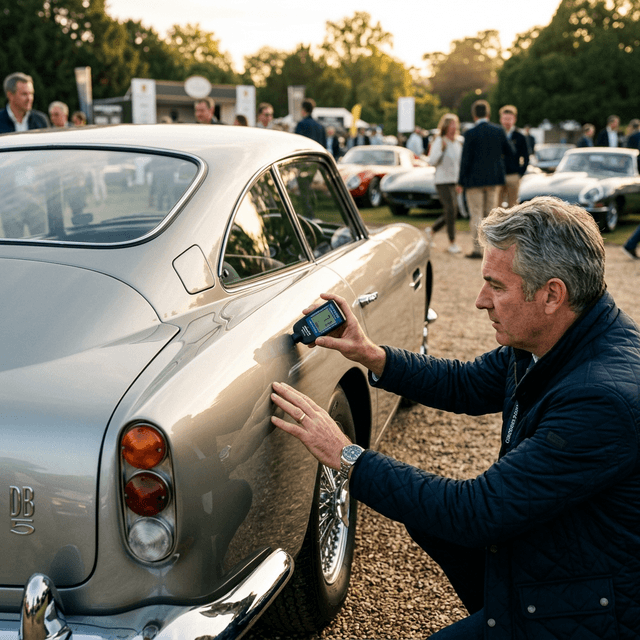
▸Paint depth readings (reveals hidden bodywork)
▸Undercarriage inspection on a lift
▸Electronics and HVAC functionality
▸Frame and structural integrity check
Find a specialist. Don't send a Porsche to a general mechanic. Find someone who works on that specific make and model.
Step 4: Factor in Total Cost of Ownership
The purchase price is just the beginning. Before you commit, estimate:
▸Insurance: Agreed-value policies for collector cars can be surprisingly affordable ($500-$1,500/year for most cars under $100K)
▸Storage: A climate-controlled garage matters. Budget $200-$500/month if you don't have one
▸Maintenance: Service intervals, tire costs, and known expensive repairs for that specific model
▸Parts availability: Some cars have readily available parts; others require months-long waits for NOS components
The Golden Rule
If a deal seems too good to be true, it usually is. The best deals are 10-20% below market — enough to be meaningful, but not so cheap that it signals problems. Trust your research, get the PPI, and be willing to walk away.